Geiger-Lund Asparagus Harvesters
The Future of Asparagus Harvesting
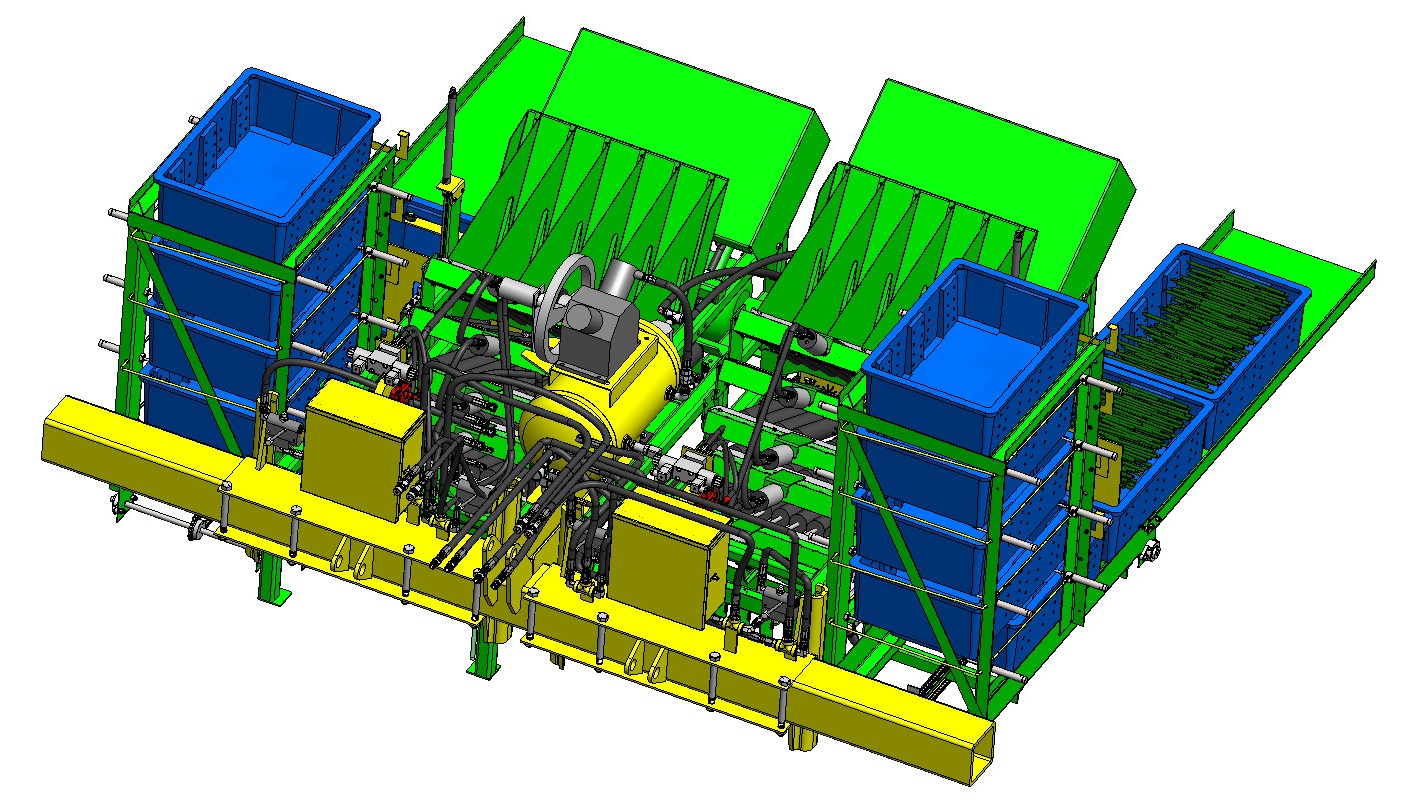
Description:
- Height: 5 feet
- Width: 10 feet
- Length: 9 feet
- Weight: 3,000 lb.
- Mounting: 3-point hitch.
- Estimated harvesting speed: 0 - 3.5 mph.
- Minimum row centers: 40 inches
- Estimated Cost: $250,000
- Can be scaled up to a four-row machine
The cost to machine harvest asparagus is determined by a number of
factors: Here is a
small piece of the spreadsheet.
| Machine Cost | $250,000 | $ |
| Maintenance | 3,000 | $/year |
| Years machine cost amortized | 10 | years |
| Driver wages | 20 | $/hour |
| Fuel cost per gallon | 5 | $/gal |
| Fuel consumption | 1.5 | gal/hour |
| Speed | 2.5 | mph |
| Operation hours per cutting | 24 | hours |
| Crop row center distance | 48 | inches |
| Number of cuttings per season | 35 | |
| Hand harvest yield / Acre | 10,000 | pounds |
| Machine yield percentage | 0.75 | % |
| Harvesting Cost / Pound | $0.18 | $/pound |
How it works
-
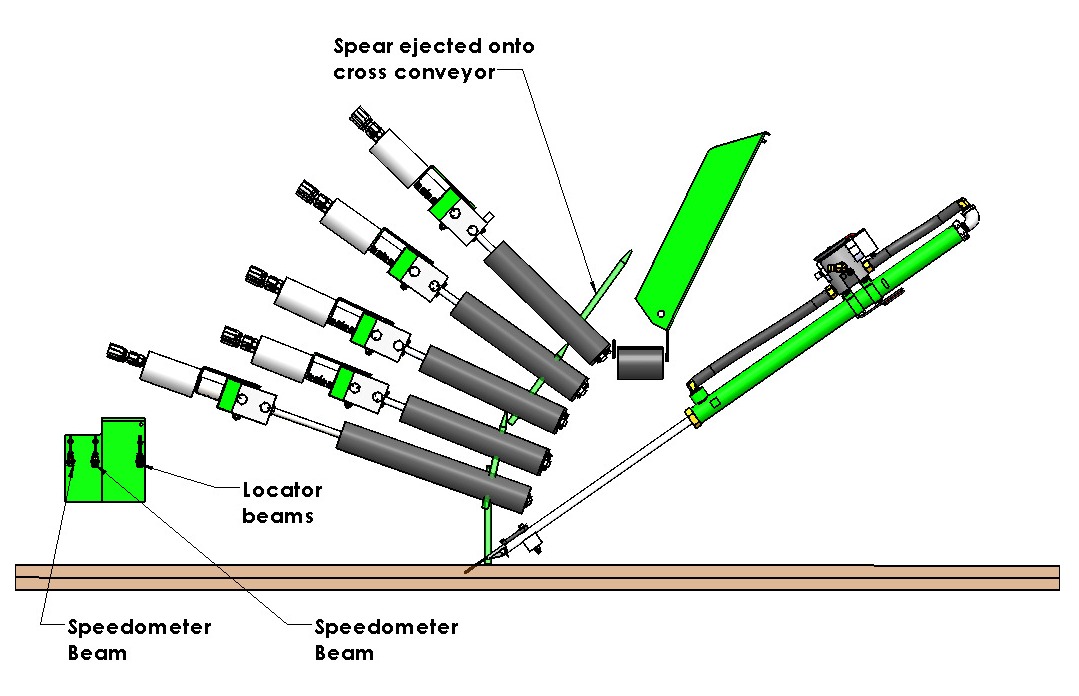
There are 8 photo-sensors spread across the bed dividing the bed into eight 3-inch-wide channels.
-
There are eight 3-inch wide blades on the ends of eight air cylinders that align with the sensors.
-
When a spear passes through the speedometer beams it measures the speed of the machine.
-
When a spear passes through one of the spear sensor locater beams the machine knows it's location and speed.
-
After the proper time delay the cylinder is fired and the blade severs the spear at ground level.
-
The spear is then lifted up through a series of counter rotating rollers onto the conveyor.
-
The conveyor receives the spears butt-first, keeping them oriented in the same direction as they fill the lug box.
-
As the lug box fills, it is incrementally pushed to the rear. When full, a new empty lug takes it's position.
| Here are some clips from 2017 in Nyssa Or. | |
? 2025 Geiger-Lund Harvesters Geiger Manufacturing 1110 E. Scotts Ave., Stockton CA. 95205 Phone (209) 464-7746